The Ultimate Guide to Working With a TV Composer: Everything You Need to Succeed
![[HERO] Working with a Film/TV Composer](https://cdn.marblism.com/ucCN4rIzorX.webp)
Here's the thing most directors and producers don't realize: you don't need to know a single thing about music theory to work with a TV composer. You don't need to play an instrument, read sheet music, or speak the language of augmented chords and key signatures.
What you do need is a solid understanding of how the collaboration process works, and that's exactly what this guide is here for.
Working with a composer for hire is a creative partnership, not a transaction. When done right, it's one of the most exciting parts of bringing your project to life. The music becomes the emotional backbone of your story, and the composer becomes one of your most trusted collaborators.
Let's break down everything you need to know.
You Don't Need to "Speak Music"
One of the biggest misconceptions about hiring a film composer or television composer is that you need to understand music to communicate effectively. Not true.
The best composers are translators. Their job isn't just writing notes on a page, it's taking your vision and translating it into sound. You might describe a scene as "tense but hopeful" or "like standing on the edge of something unknown," and a good composer will know exactly what instruments, textures, and rhythms convey that feeling.
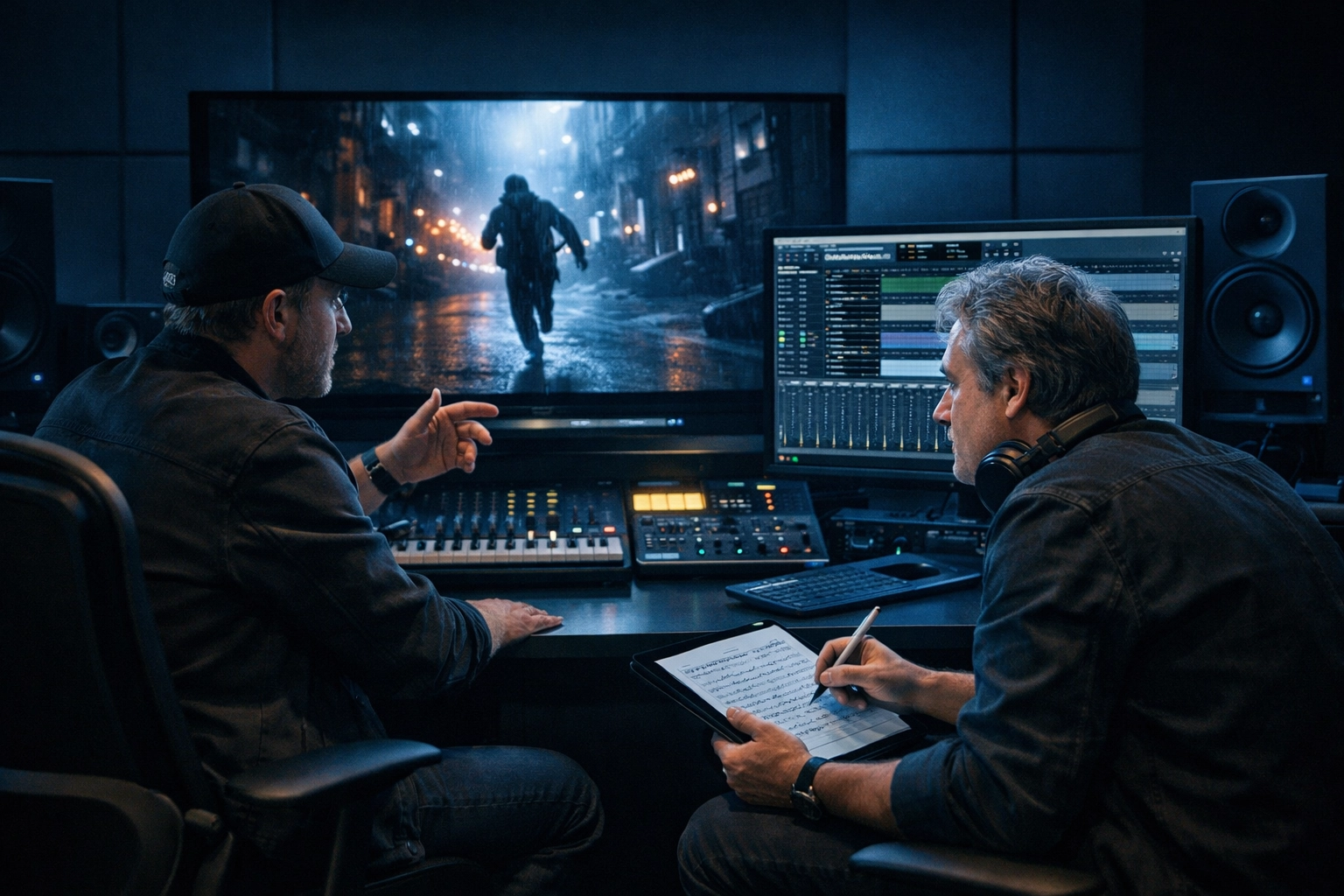
This is where music references come in handy. If you're editing and using temp music (temporary tracks borrowed from other films or albums), those become an invaluable communication tool. Temp music shows your composer the vibe, pacing, and emotional tone you're aiming for, even if the final score sounds completely different.
Don't be shy about sharing Spotify playlists, film scores you love, or even pop songs that capture the right mood. These references give your composer a starting point and help bridge any communication gaps.
The Composer's Role: Pitching a Vision
Part of what makes a great composer for hire is their ability to pitch ideas, even when you don't know exactly what you want yet.
Maybe you haven't thought deeply about the music. Maybe you're not sure if your project needs orchestral strings or gritty synths. That's okay. A skilled composer will help you explore options and build what's called a sonic palette: a curated collection of sounds, instruments, and musical styles that give your project its unique voice.
This palette can be created from a script, a rough cut, a plot summary, or even just a creative phone call. The composer might send you a reel of music examples, some orchestral, some electronic, some hybrid, to see what resonates with you. This is a two-way conversation. If you hate something, say so. If you love something, say that too. If you know you absolutely don't want woodwinds but you're obsessed with the idea of synths paired with bombastic brass, speak up. The earlier you communicate these preferences, the better.
The Scoring Process: Step by Step
Now let's get into the actual workflow. Here's what working with a TV composer typically looks like from start to finish.
1. Building a Sonic Palette
This step can happen before or after the spotting session (more on that in a second), but it's all about establishing the musical identity of your project.
The composer will create a curated reel of music: either existing tracks or original demos: that align with the tone and style of your story. This might include references to other scores, genre-specific sounds, or completely original sketches.
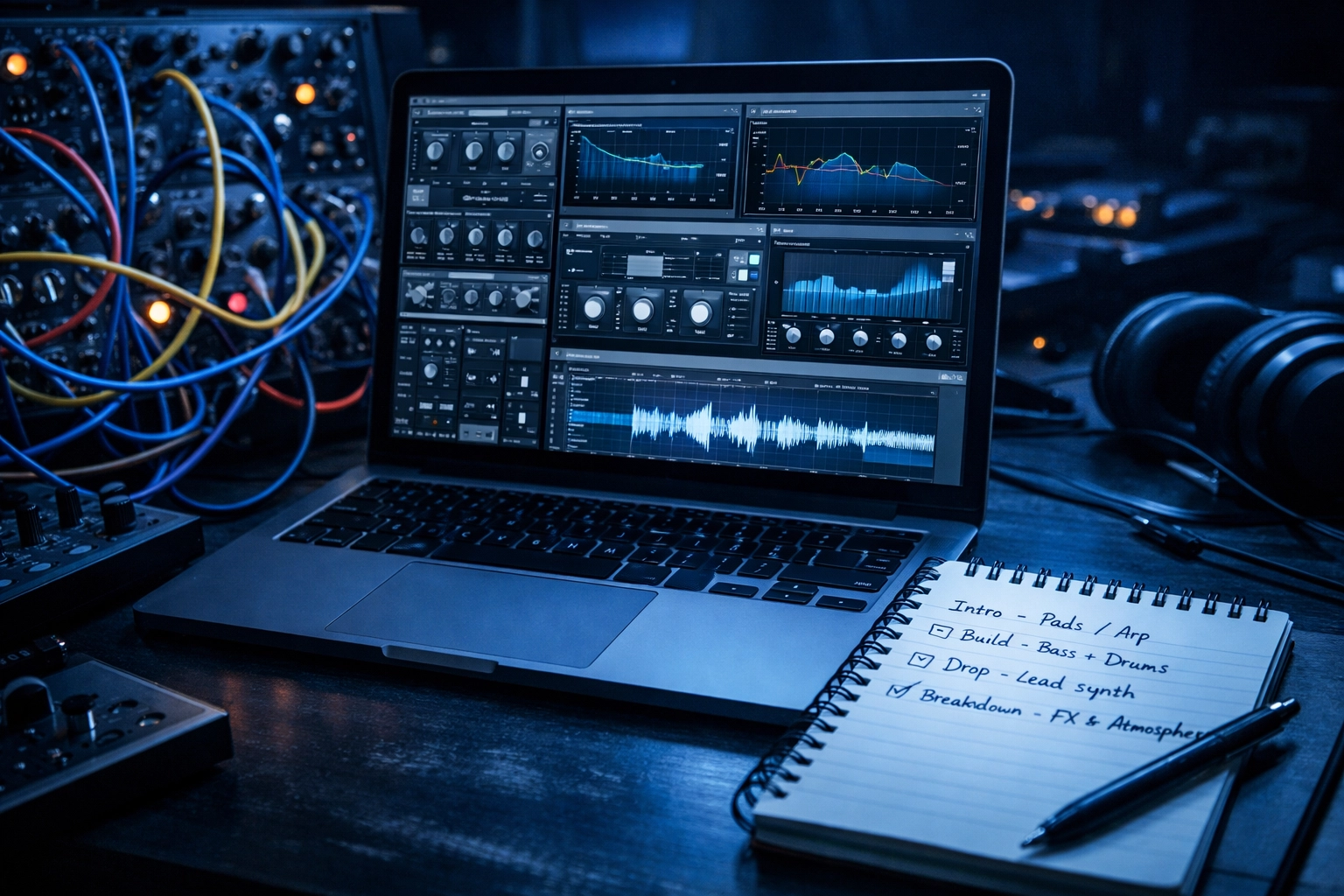
The goal? Lock in the sonic world before diving into full composition. This is your last chance to course-correct if something doesn't feel right. Want to try a completely different approach to a scene? Now is the time to experiment.
2. The Spotting Session
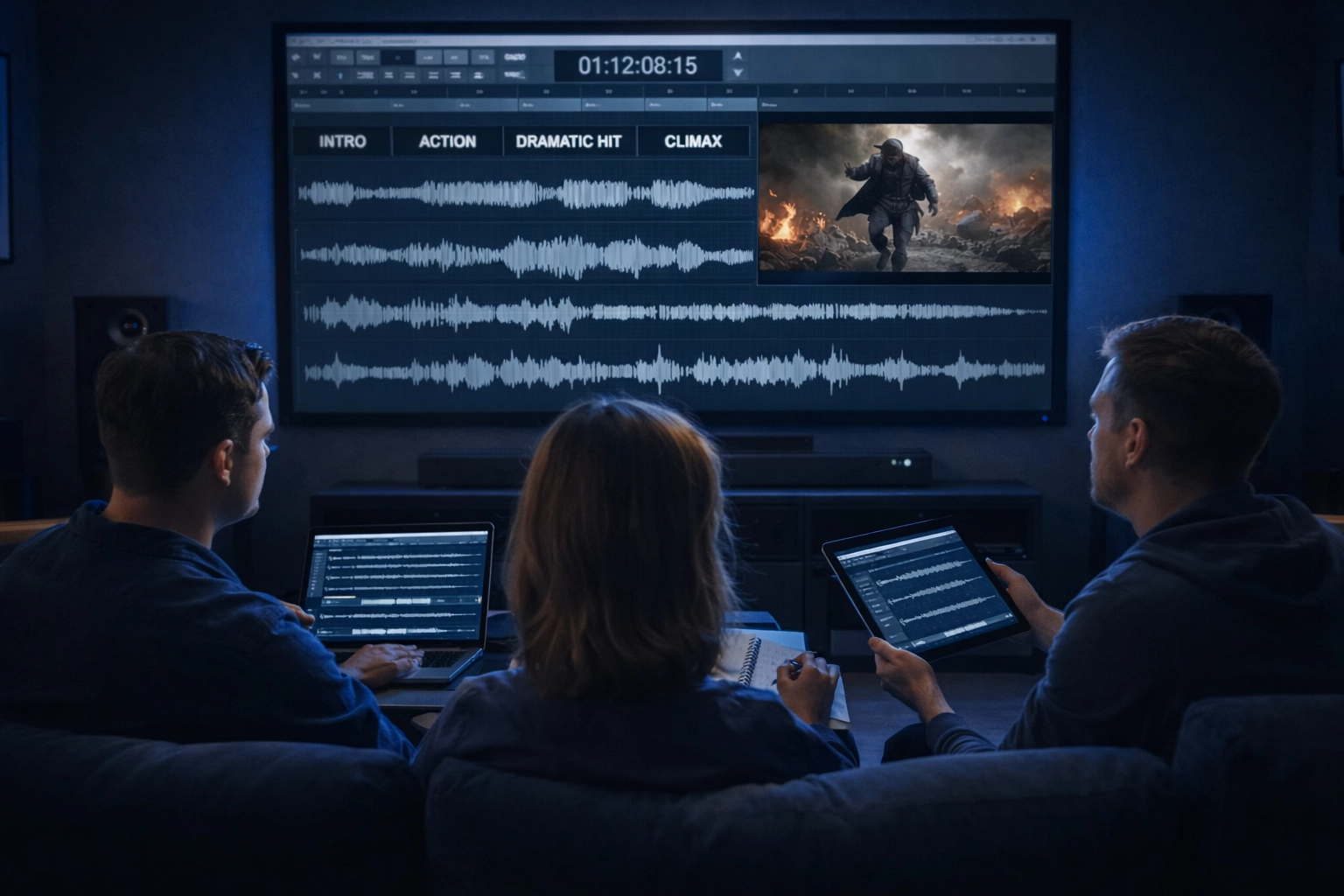
The spotting session is where you and the composer sit down (in person or virtually) and watch your project together. You'll decide:
- Where does music start and stop? (These are called "in and out points")
- What is the music conveying in each scene?
- What are the big-picture emotions, character arcs, and narrative beats?
This is one of the most important meetings in the entire process. It's where creative alignment happens. You're not just marking timestamps: you're discussing the why behind every musical moment.
3. Writing (Composition)
This is where the composer does what they do best: compose.
Depending on the scope of your project, this phase can take anywhere from a few weeks to several months. The composer is crafting themes, developing motifs, and writing music cue by cue based on the spotting session notes and the agreed-upon sonic palette.
4. Score Review
Once the composer has written music, it's time for feedback. This could be in the form of rough demos or polished mixes, depending on how the composer works.
Here's a pro tip: the earlier you share music, the better the communication. Think of this as phase two of locking in the musical identity. If something isn't working, this is the moment to address it: before everything is recorded and mixed.
Listen carefully. Ask questions. If a cue isn't hitting the emotional note you need, talk through it. The composer wants your honest feedback, not polite nodding.
5. Score Recording
If you're using live musicians, this is when the magic happens. Some composers work with full orchestras. Others record themselves playing multiple instruments (I personally play a lot of the instruments you hear on my scores).
Live recording brings warmth, humanity, and nuance that sample libraries can't always replicate. But it also requires careful planning, studio time, and coordination.
6. Score Mixing
Once the music is recorded, it needs to be mixed. This is typically handled by a dedicated score mixing engineer who specializes in balancing film music: not all composers are set up to mix in surround formats, and not all composers want to focus on mixing while they're in the creative headspace of writing.
Depending on the project timeline and budget, I'll either mix the score myself or collaborate with a brilliant mixer I trust (shoutout to Michael Bouska, who does incredible work).
The mixer ensures that every instrument sits perfectly in the sonic space, that the music translates across different playback systems, and that the final product is polished and professional.
7. Delivery
Finally, the music needs to be delivered to your post-production sound team or dub mixer in a format they can work with.
The industry standard is to provide:
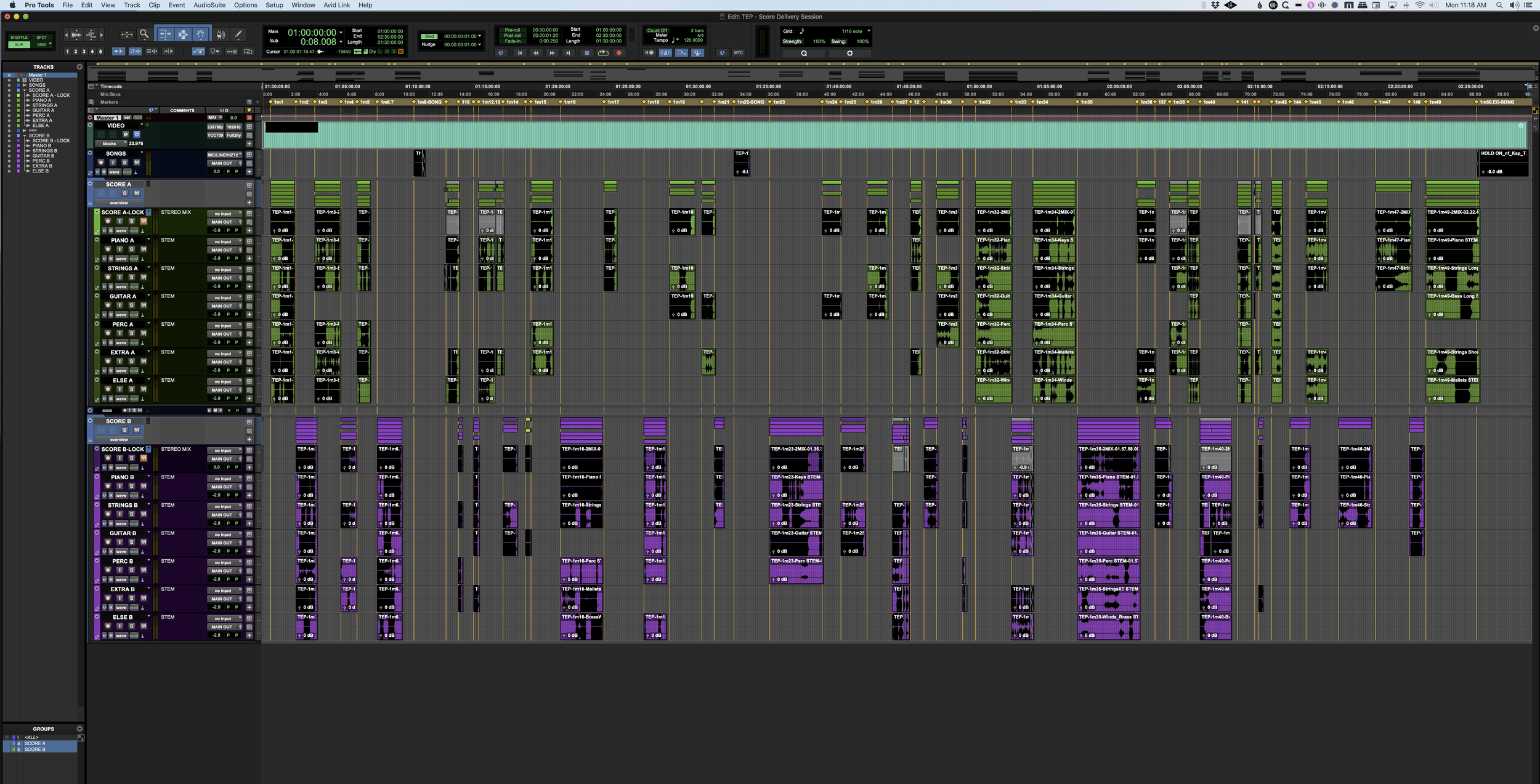
- A Pro Tools session
- A full mix of each cue
- Stems (individual instrument groups) for each cue
Stems are crucial because they give the dub mixer control. Let's say a guitar solo is clashing with dialogue in one specific moment: the mixer can pull down just that guitar track without affecting the rest of the music. Or maybe you want the drums and percussion to punch harder during an action sequence but sit lower during dialogue-heavy scenes. Stems make that possible.
We'll also arrange the music in a "checker-board" format (odd cues on one track, even cues on another) to make the post-production workflow as smooth as possible.
The Most Important Skill? Translation.
At the end of the day, writing music is the composer's job. But the most important skillset is translating your vision into the sonic space.
That's what separates a good composer from a great one. It's not just about technical chops or a impressive portfolio: it's about listening, understanding, and transforming your creative ideas into a score that elevates your story.
If you're looking to hire a composer for your next TV project, the key is finding someone who gets that. Someone who communicates clearly, collaborates generously, and treats your project like it's their own.
Because when the partnership works, the music doesn't just support your story: it becomes your story.
Ready to start the conversation? Let's talk about what your project needs.